
By Dr. Michael Campos, High School Religion, Theology and Spirituality Faculty
Seminar 3 Introduction
The “Spirituality and Service Seminar” (S&S) is the last of three weeklong modules offered by RSCJ-SHIFT’s Summer Institute 2023.
Similar to the two previous seminars, S&S featured speakers, volunteers, and facilitators from France (Elea Bertolacci), the United States (Samuel Schelble, MA student of theology from Boston College), and the Philippines (Dr. Agnes Brazal, theology professor from De La Salle University, Manila). I represented Convent & Stuart Hall as co-facilitator with Sr. Lydia and Sr. Digna Dacanay.
Participants came from a variety of institutions throughout the Philippines. Given the focus on “Spirituality and Service,” however, S&S attracted a large local constituency, i.e., student leaders from the University of Eastern Philippines, government staff, parish leaders and youths under the care of the Department of Social Work. This shaped the tone of conversation, with languages straddling Tagalog, English and the local dialect, Ninorte Samarnon.
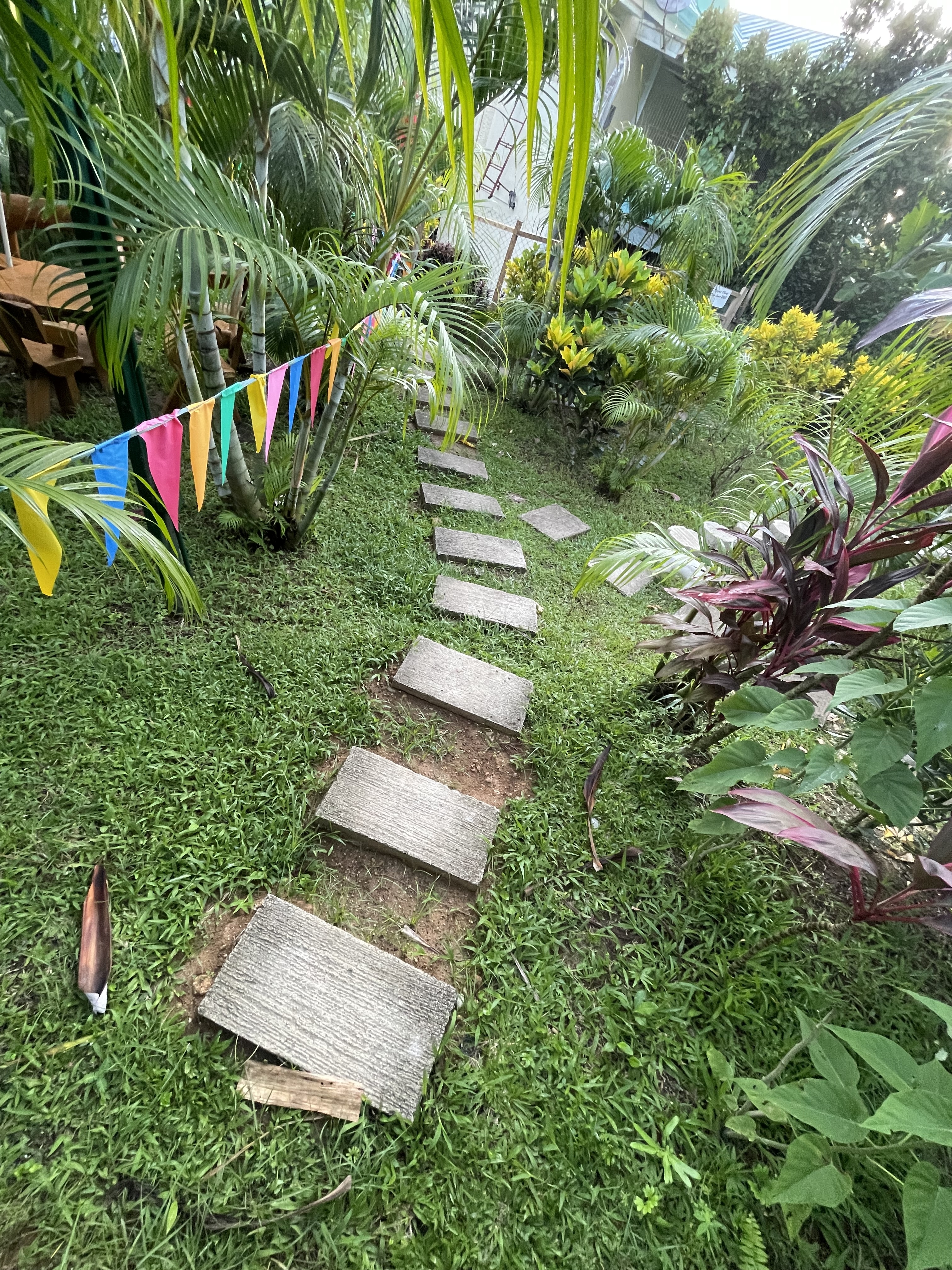
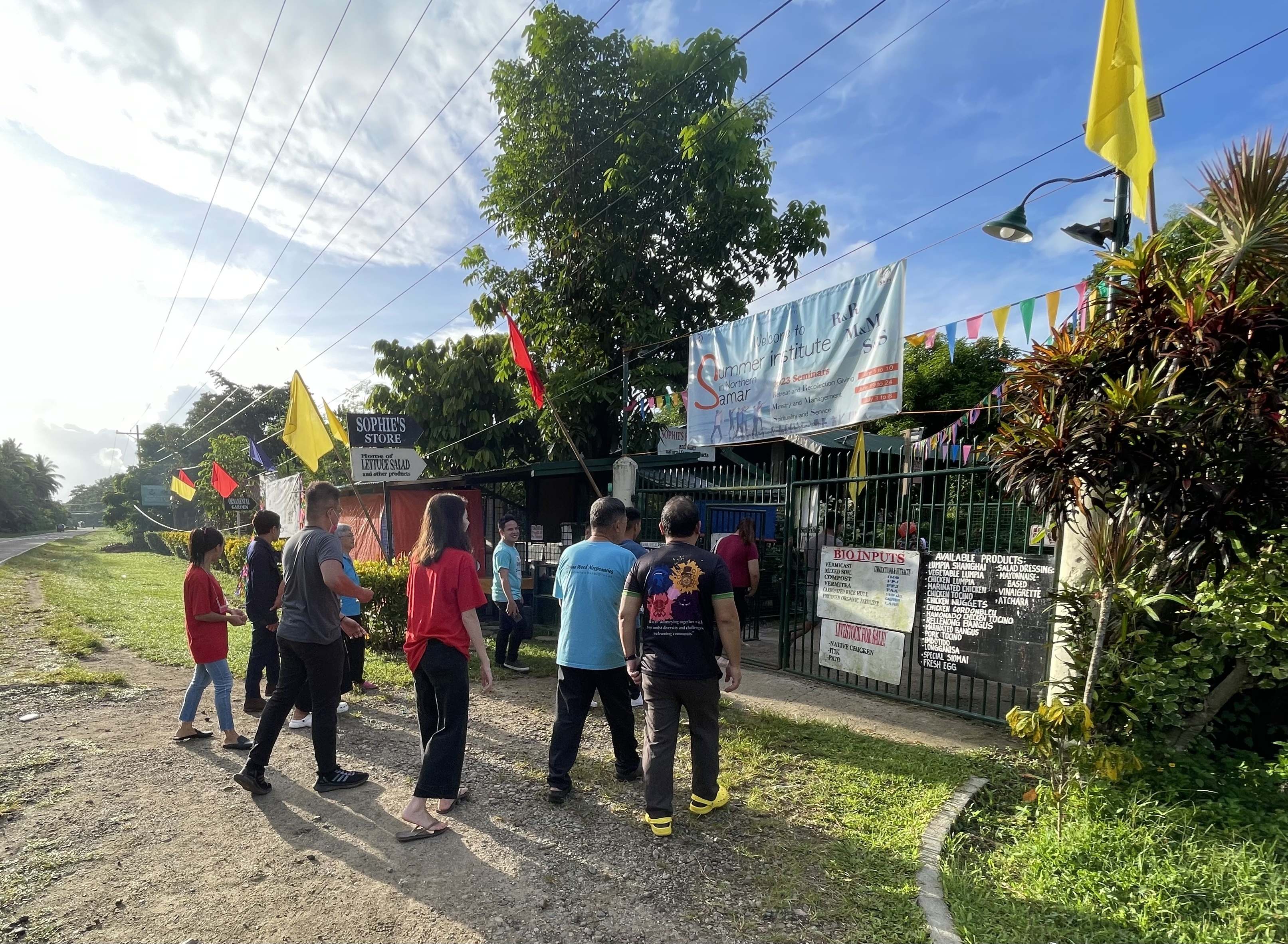
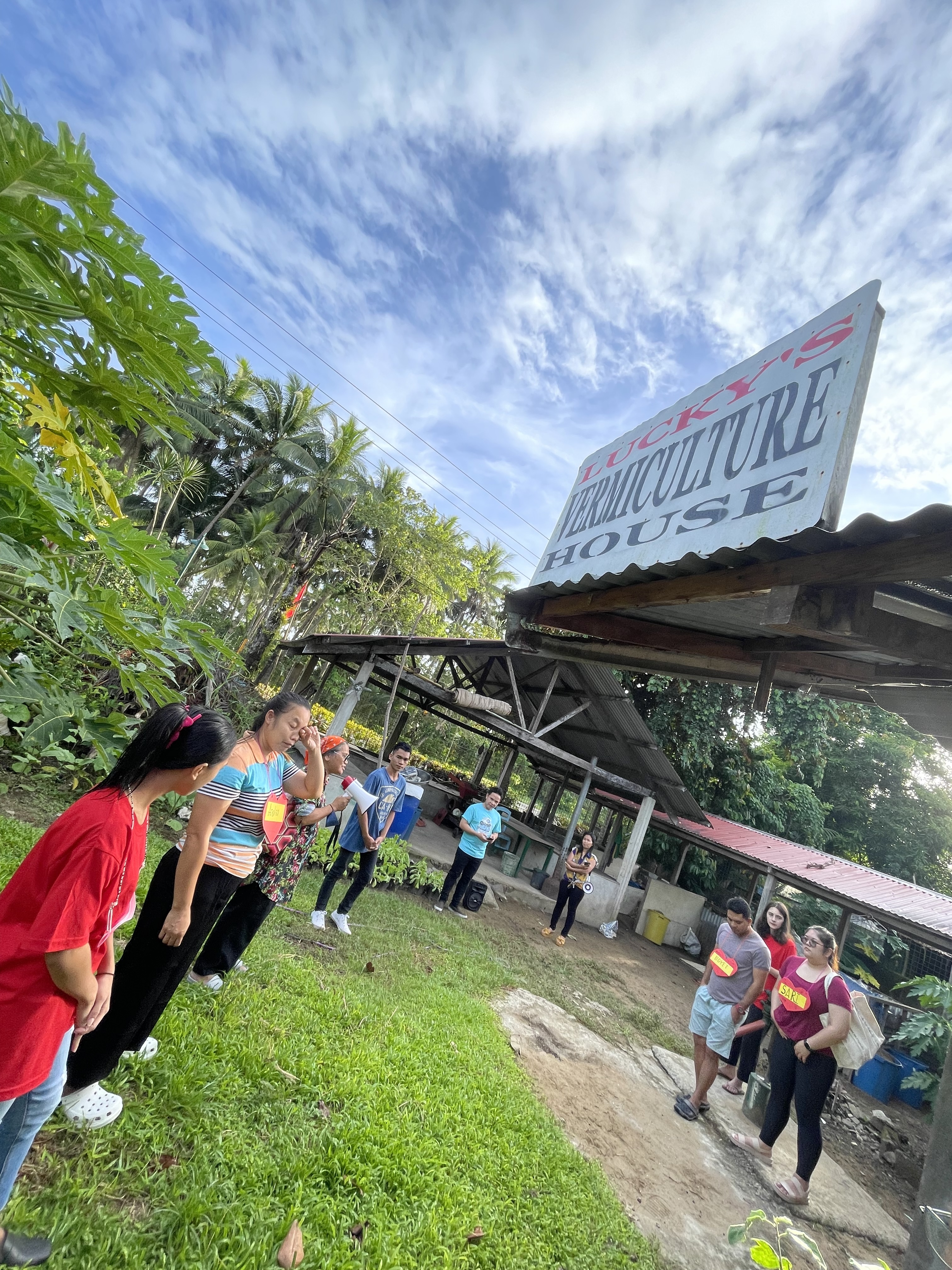
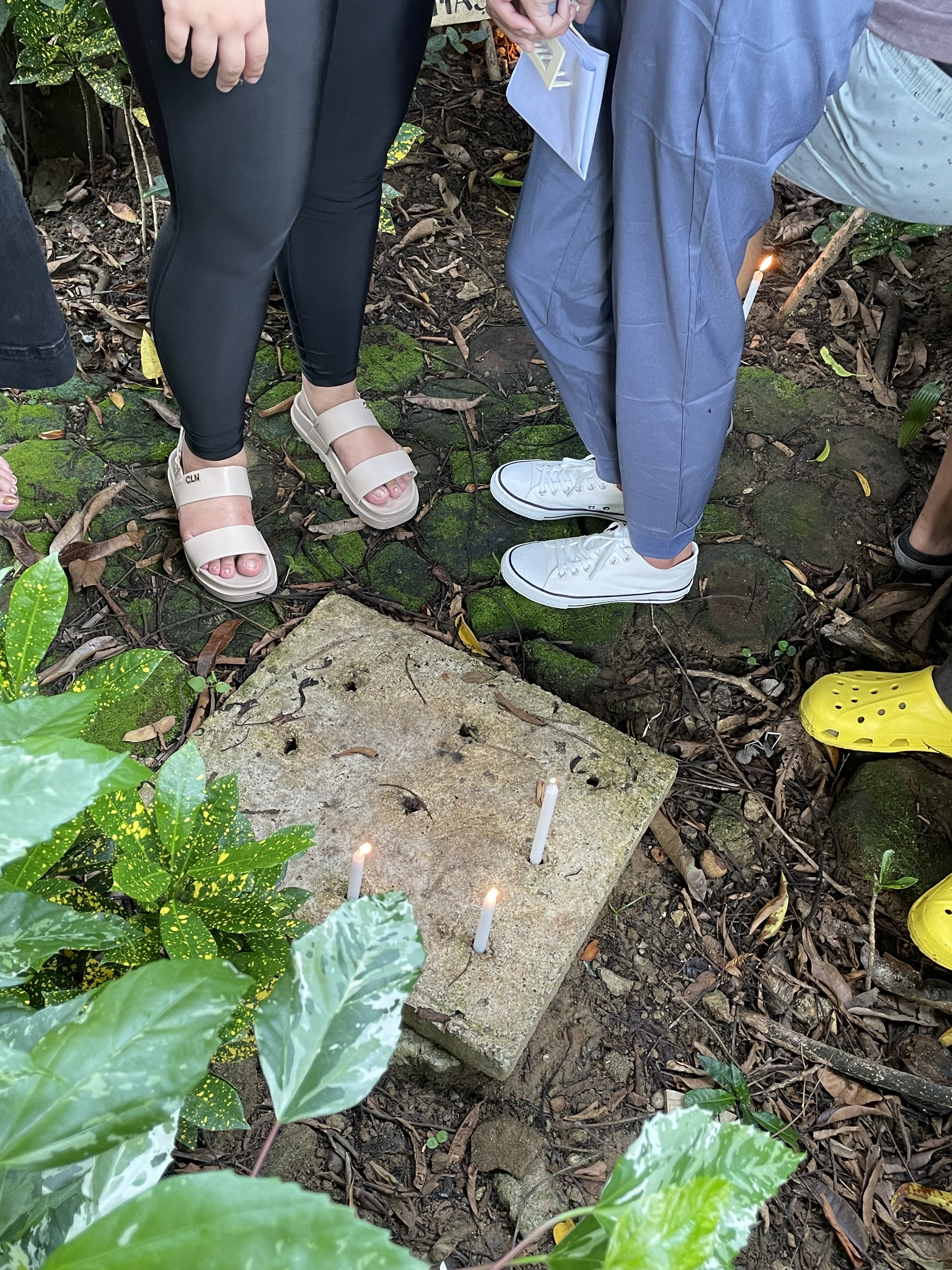
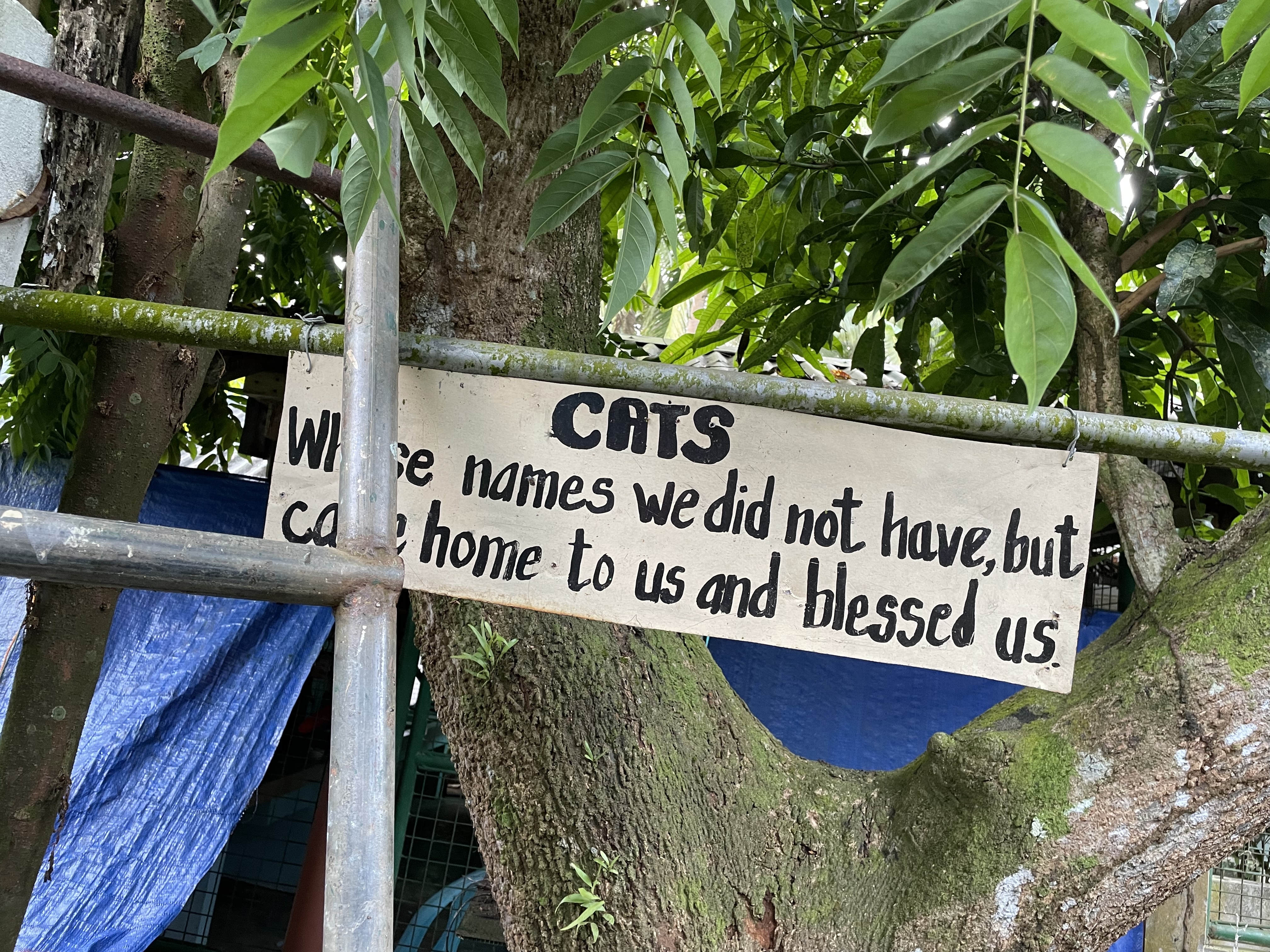

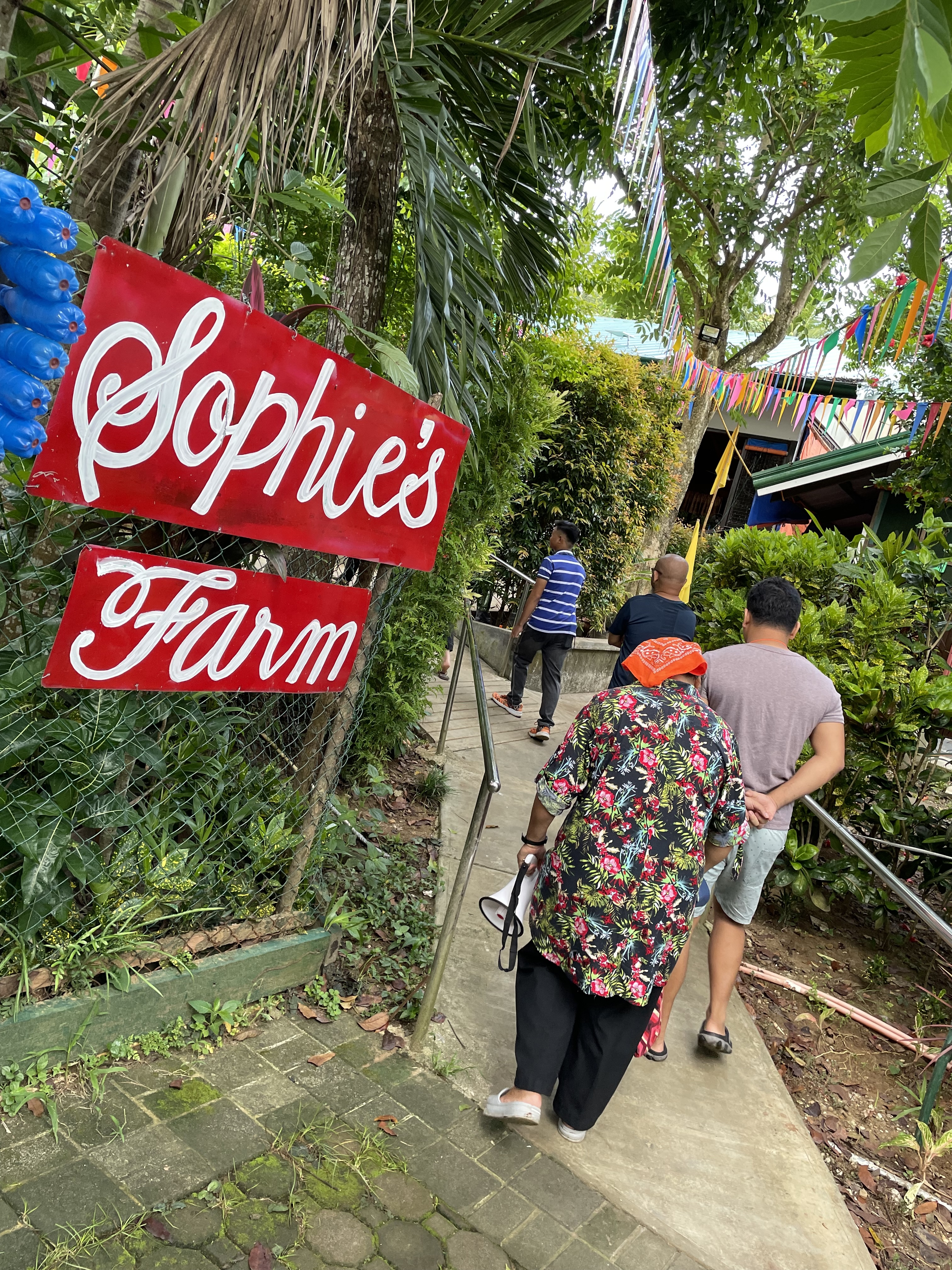
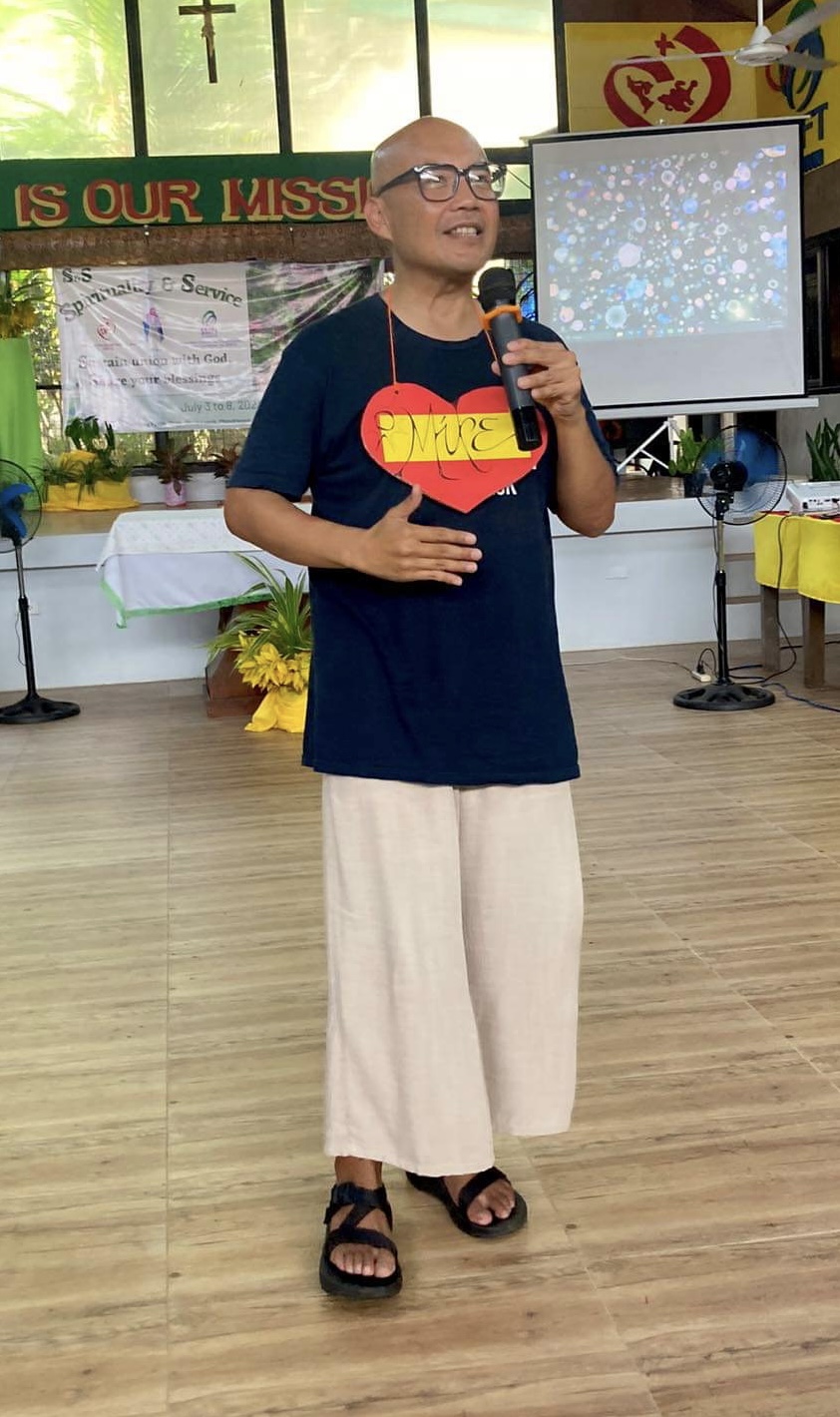
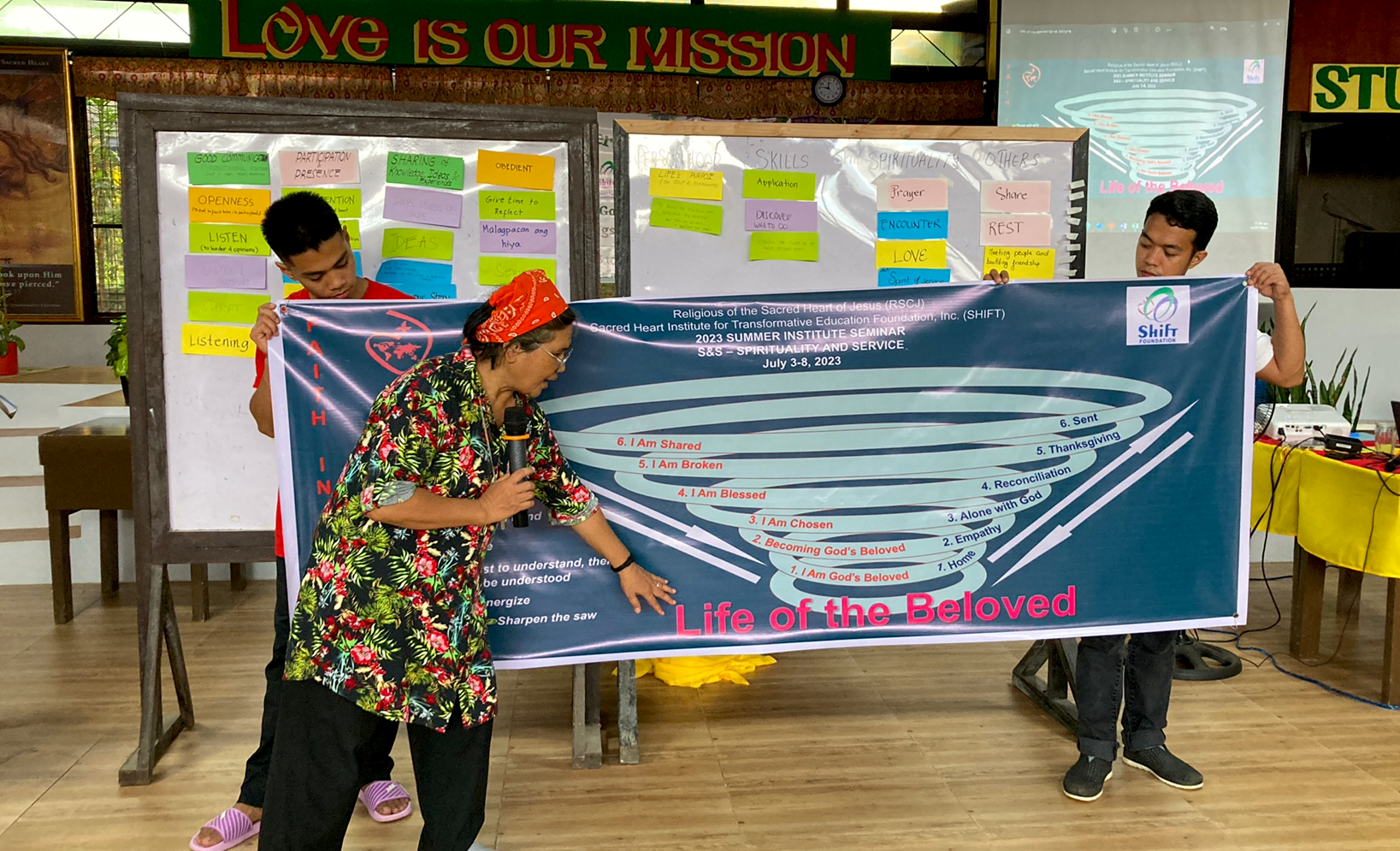
Photos by Dr. Michael Campos, Religion, Theology & Spirituality, Faculty
Seminar 3, Day 1: Being God’s Beloved
While S&S also reflected Henri Nouwen’s framework of blessing, brokenness, and sharing, Sr. Lydia grounded spirituality in the practice of “pilgrimage.”
Waking up at dawn, the few participants who arrived the previous evening meandered to the gates of Sophie’s Farm, right on the provincial highway contouring the beach. Sr. Lydia introduced the concept of “pilgrimage” as a practice of conversion to a way of life where intention, speech, and action aligned with one another. She described this process akin to “humanization,” a movement of ever-deepening awareness.
We made a first stop at Lucky’s Vermiculture Center, which houses the farm’s composting system. Sr. Lydia narrated the story of the eponymous Lucky, the dog who — after barely surviving puppyhood — grew to embody unconditional love for community members of Sophie’s Farm.
We then proceeded along Sophie’s Pathway and introduced participants to the story of St. Madeleine Sophie Barat, taking note of how a rigid upbringing complemented, in turn, a deep, interior freedom. It is this sense of freedom that allowed Sophie to imagine a transformative life for women beyond the social limitations imposed on them after the French Revolution. For Sr. Lydia, this interior freedom primed Sophie for personal, spiritual and social conversion.
After a short visit to the shrine of the Sacred Heart of Jesus, participants gathered at the “clubhouse” of Sophie’s Village — cheekily mimicking the nomenclature of gated subdivisions typical in Philippine suburbs — for much deserved breakfast.
The day’s schedule followed the flow of earlier seminars, beginning with animations (energetic song and prayer movements) followed by a scriptural meditation on the day’s theme. Sam Schelble invited us to consider what it means to be created in imago Dei (image of God). An ancient Judeo-Christian concept dating from the book of Genesis, imago Dei speaks of a dynamic unfolding. Just as God devoted six days in creation, so are we engaged in the process of continuous self-discovery, itself a practice of “creation.” In Genesis 1, imago Dei functions as the final step in bringing the material world to life. God is thus reflected in the entirety of creation, not just through human beings. To be imago Dei is to stand in flux and possibility.
In the afternoon, Sr. Lydia invited participants to reflect on their “deepest desires.” She introduced the practice of collective listening followed by small group sharing. This tension between large- and small-group interactions provided multiple entry points for participants to engage one another according to varying levels of comfort.
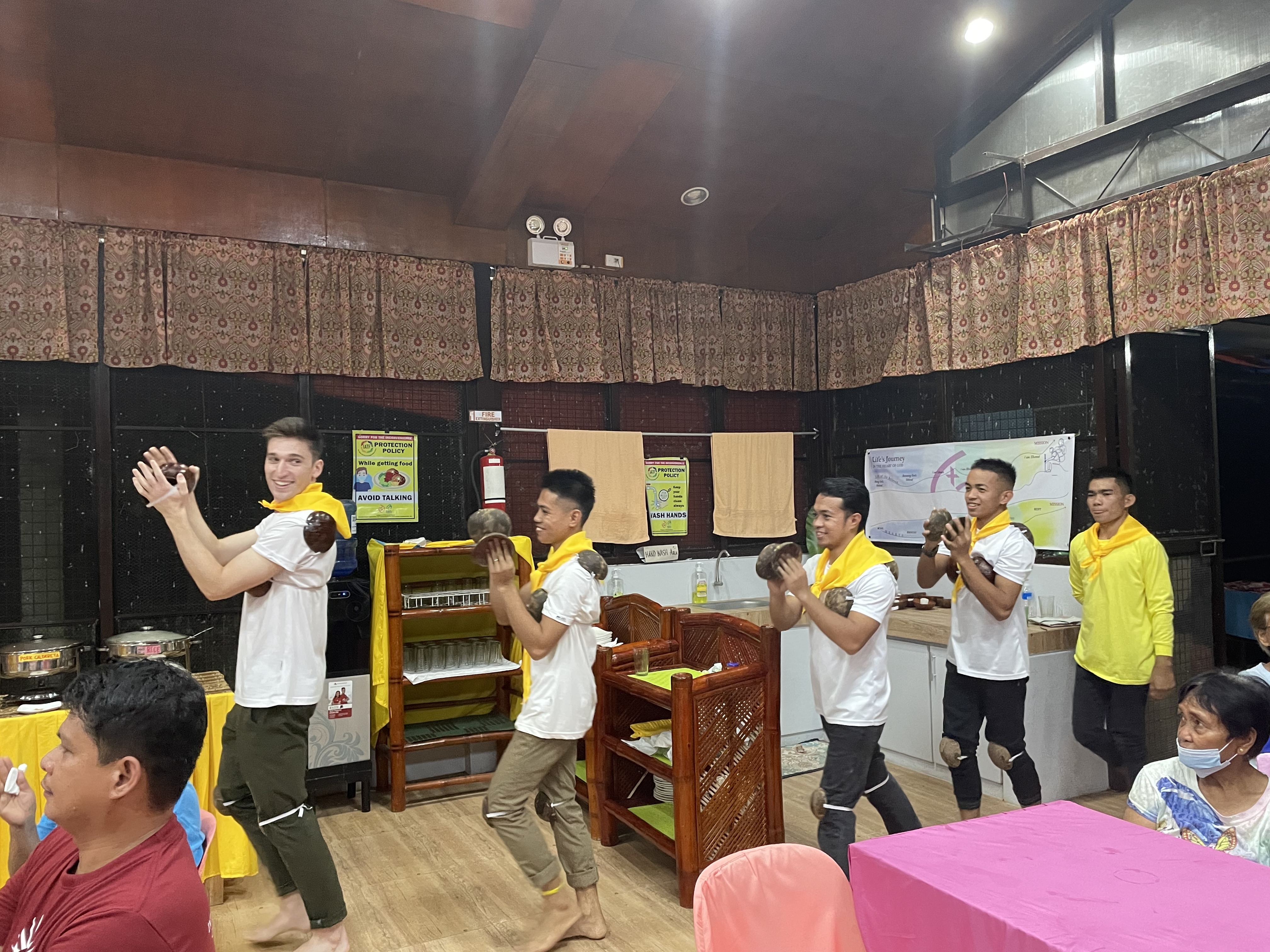
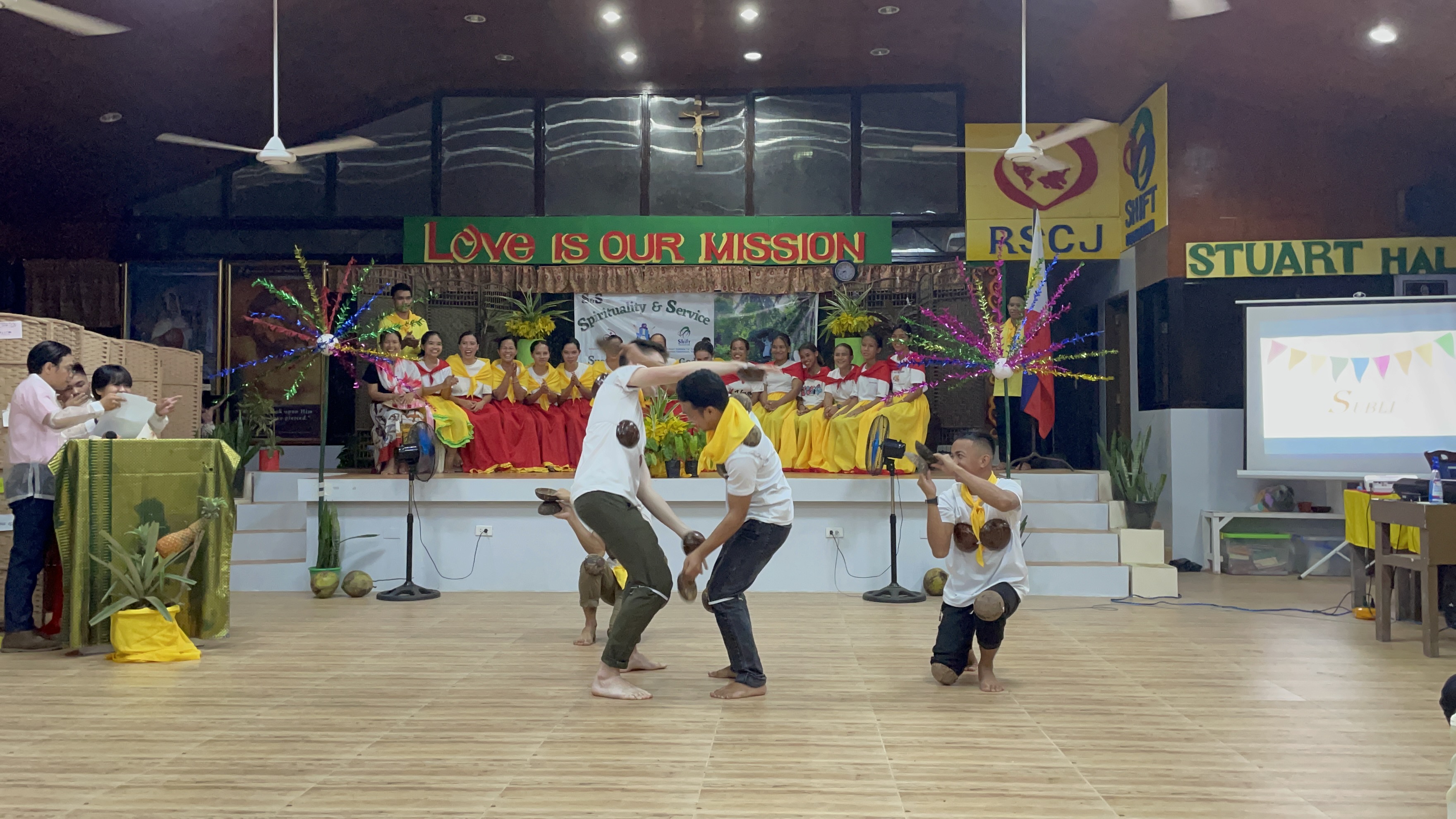
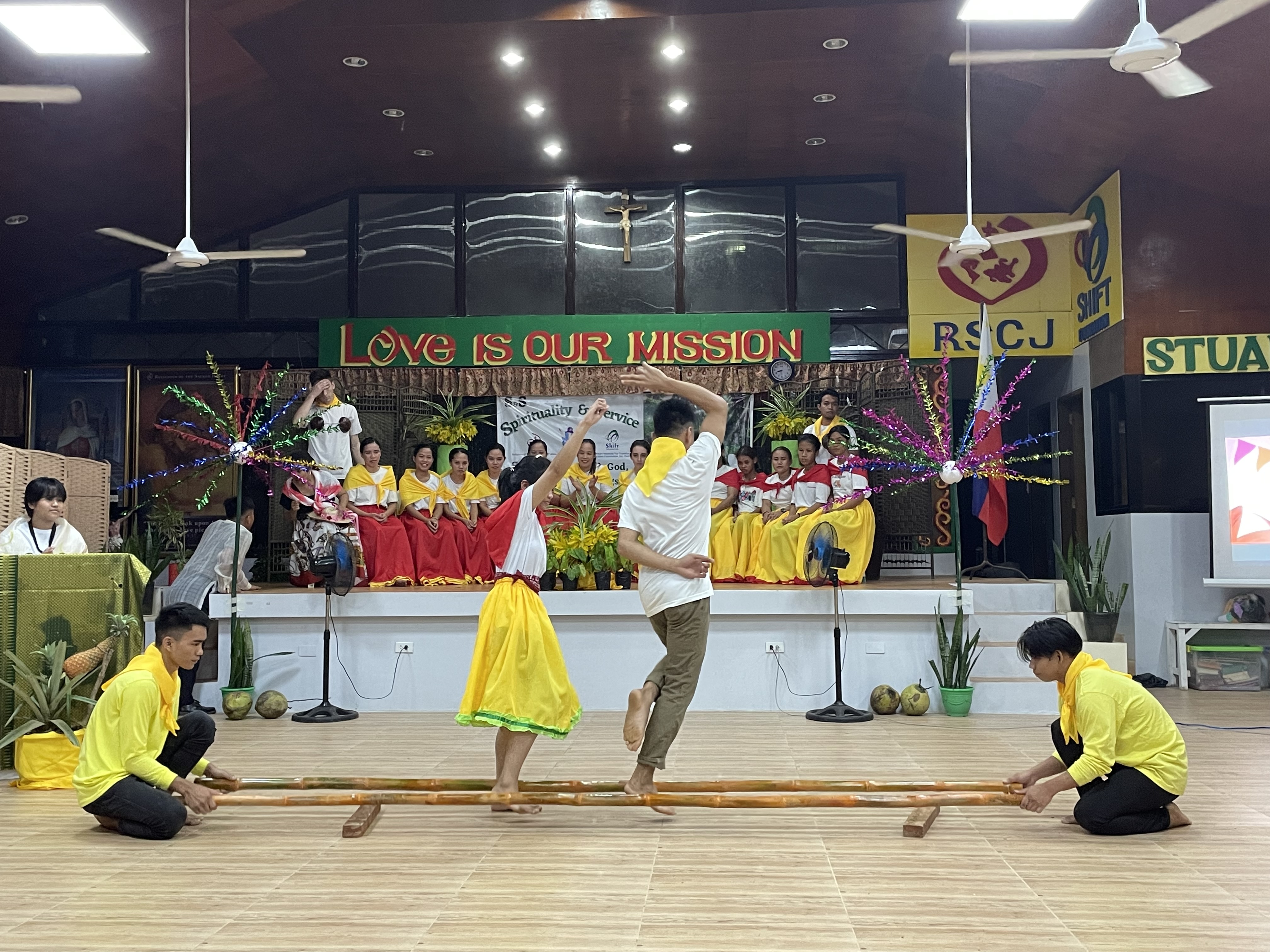

Photos by Dr. Michael Campos, Religion, Theology & Spirituality, Faculty
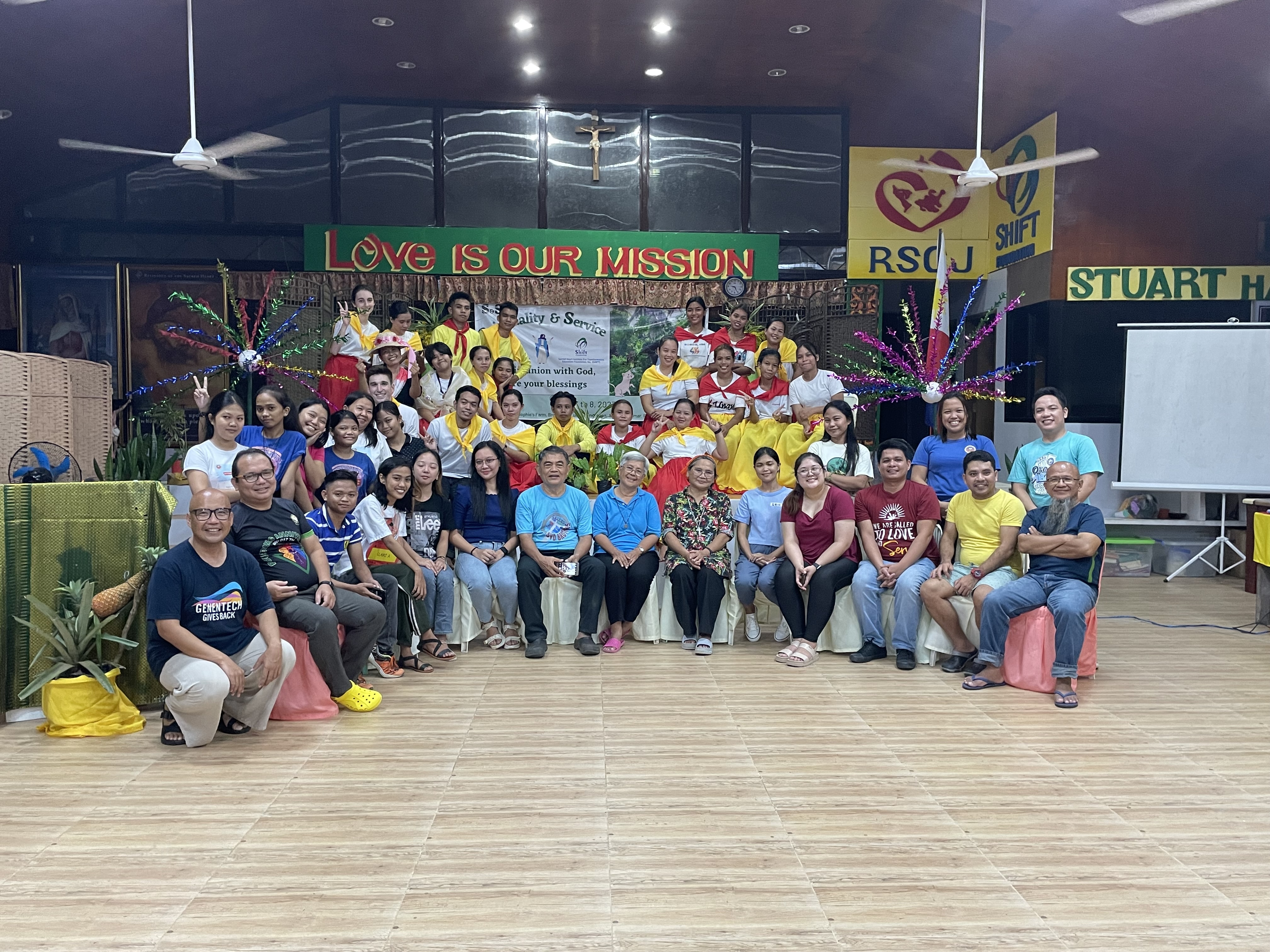
In typical Sophie’s Farm tradition, participants were officially welcomed during Mass at day’s end. The liturgy was followed by a celebratory dinner and Barrio Fiesta, a cultural presentation of indigenous dances and songs. Whereas Sr. Mercy surprised us with a Ugandan liturgical dance two weeks ago, this time, it was Sr. Digna who wowed us with her lithe negotiation of clacking bamboo poles in tinkling (apparently, she was a quasi-professional dancer in a previous life). Sam, who is proving to be quite the expert in traditional dances, leveled-up his performance of Da Coconut Nut with the more complicated turns of Maglalatik.

 Convent & Stuart Hall Travel